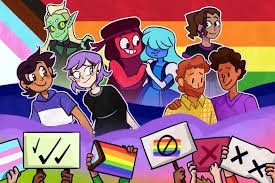
In today’s world, representation in media is more important than ever. It helps shape our understanding of different communities, fosters empathy, and breaks down barriers. Recently, LGBTQ characters have become more prevalent in cartoons, a move that has sparked considerable debate. As a father, creator, and someone who deeply cares about how media influences young minds, I have mixed feelings about this trend.
The Positive Side: A Teaching Moment
One of the biggest positives of LGBTQ representation in cartoons is that it opens up a dialogue between parents and children. It’s an opportunity for parents to educate their kids about the diverse world we live in—different people, beliefs, and lifestyles. In an ideal scenario, these conversations can teach children to be accepting, open-minded, and empathetic, qualities that are crucial in today’s increasingly global society.
For many parents, LGBTQ characters in cartoons can be a starting point for discussions about respect, love, and the idea that it’s okay to be different. This can help children grow up with a broader understanding of the world around them, making them more inclusive and less likely to harbor prejudices.
The Negative Side: Premature Exposure?
However, there’s another side to this coin that I find concerning. Cartoons, traditionally, have been a space for fun, imagination, and learning basic concepts like colors, numbers, and moral lessons. The introduction of LGBTQ characters, while progressive, might also be pushing children to think about sexuality before they’re ready.
Sexuality is a complex topic, and I believe that it shouldn’t be introduced to children too early. Cartoons are supposed to be about innocent fun—what does understanding sexual diversity have to do with learning the color red or the alphabet? There’s a fine line between educating children and pushing them towards concepts they’re not yet mature enough to grasp.
Moreover, I can’t help but notice the irony in how we choose what to emphasize in children’s media. Important topics like the history of slavery are often glossed over, while sexuality and fluidity are brought to the forefront. This seems like a misplaced priority to me, especially when the focus should be on preparing children for life’s challenges at a pace that suits their developmental stage.
Finding the Balance
So where does that leave us? I believe there should be boundaries on the types of stories told in children’s media. While representation is vital, so is the timing of how and when certain topics are introduced. We need to ensure that we’re not rushing children into conversations about sex before they’re ready.
Instead of using cartoons as a medium to discuss such heavy topics, perhaps there’s a way to balance the need for representation with the innocence of childhood. When children are older and start to explore these feelings naturally, that’s when we can step in and provide the support they need to understand themselves and the world around them.
Conclusion
In the end, my feelings about LGBTQ representation in cartoons are mixed. While I appreciate the effort to create more inclusive media, I also worry about the impact it may have on children’s development. It’s a double-edged sword, one that requires careful consideration and, most importantly, open dialogue between parents, creators, and educators.
What’s your take? Do you believe LGBTQ representation in cartoons is a step forward, or do you share some of my concerns? I’d love to hear your thoughts in the comments below.
You like this article read this





 Kingpaysos.Blog
Leave a comment