By: KingPaySos
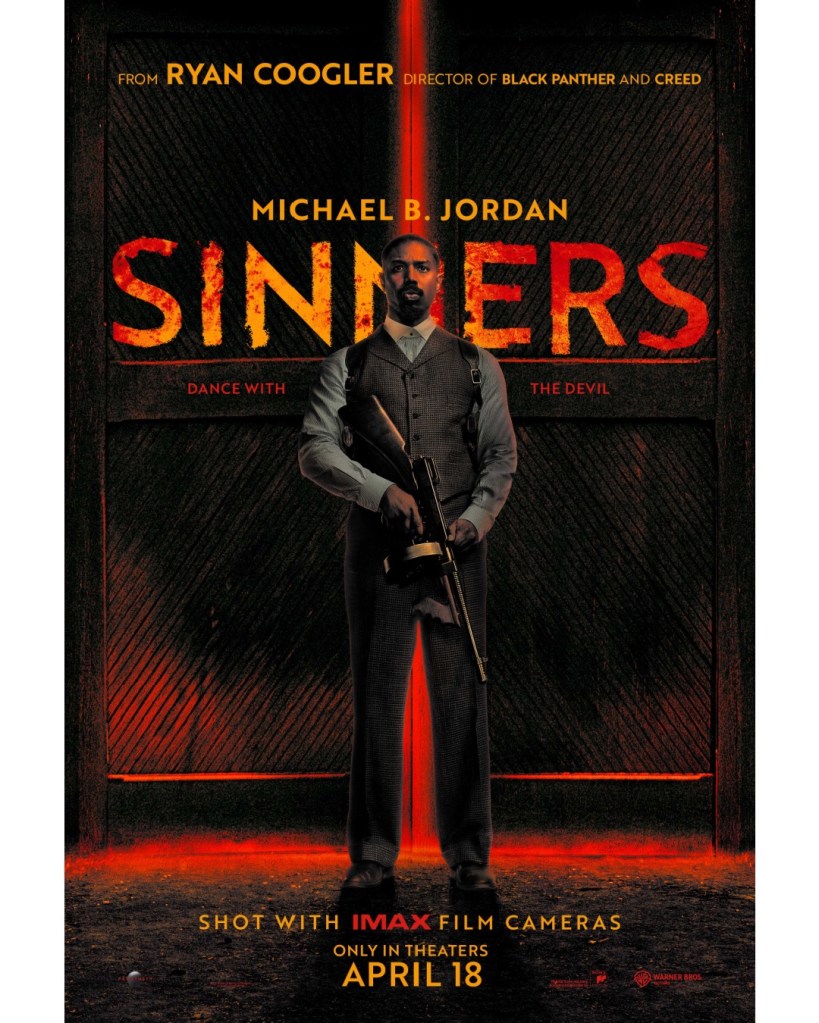
Sinners isn’t just a movie—it’s a sermon dressed in blood, blues, and betrayal. It’s a film that makes you look in the mirror and ask: What would I trade to be seen? To be heard? To be free? In an era where music has become more product than prophecy, Sinners reminds us that true art has a cost—and not everyone can afford the price.
Let’s start with Sam—the heart of the film. He’s the son of a preacher, born with a voice so powerful it echoes through dimensions. From the moment he strums his guitar, you feel it’s more than music—it’s a calling. But callings attract attention, and when that attention comes from the Devil himself, the stakes become spiritual.
The Devil in Sinners is not just a creature of the night—he’s the Minister of Music, the gatekeeper of the compromised sound. Every soul he bites joins his choir, a generation of lost voices echoing his haunting melody. And here’s where the brilliance lies: it mirrors our reality. The repetitive, soulless noise dominating airwaves today? That’s the Devil’s song. And we’re all dancing to it—willingly or not.
Sam is different. He’s pure. Unfiltered. And that purity terrifies darkness. He doesn’t need auto-tune, a gimmick, or a compromise. His gift is raw, divine. But purity is dangerous in a corrupted world. That’s why he’s targeted. That’s why he’s tempted.
The twin brothers—Stacks and Smoke—bring contrast. They are trauma embodied. Abused by their father, they kill him and escape the plantation. They rob the mob and open a juke joint with blood money. But the juke joint isn’t freedom—it’s a trap, sold to them by the Grand Master of the KKK. A setup masked as opportunity. Sound familiar? Because that’s the industry too.
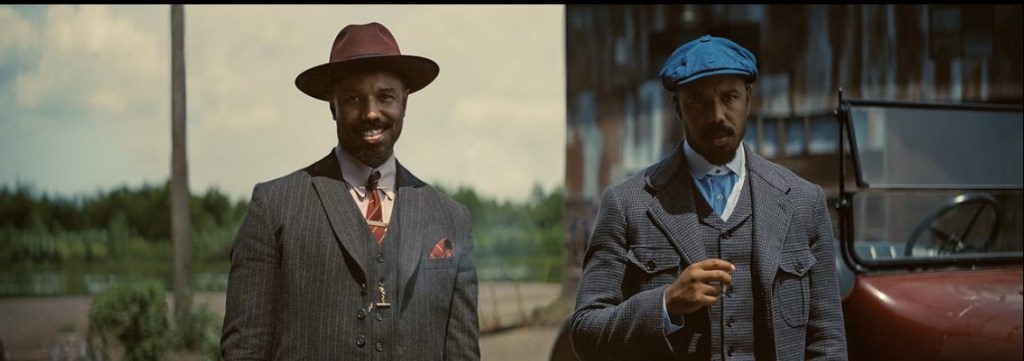
The juke joint becomes a meeting ground for every sin: lust, greed, pride, envy. It’s where dreams come to die quietly. It’s where Sam’s voice gets used to sell tickets, to make money, to entertain. Stacks rounds up another blues player—a drunk shell of what talent used to be—and it becomes clear: exploitation of the gifted is generational.
Then comes the seduction. Stacks’ lover is turned into a vampire and bites him. He falls, becomes the enemy. Smoke’s story is tragic but beautiful. His woman is spiritual. She tells him, “Kill me if I turn. Our child is waiting in heaven.” That’s love. That’s understanding. That’s sacrifice. And when it comes down to it, Smoke honors her. He becomes a soldier of light in a club drenched in darkness.
He stays behind to face the KKK alone—after one of the vampires reveals the truth of the setup. He gears up, takes them out, and dies in the process, but not before emptying his clip into the Grand Master’s chest. A Black man dying on his feet rather than living on his knees. That’s legacy.
And then there’s Sam’s return to the church. After using the very guitar that pulled him from safety to slay the Devil, he returns home—bruised, bloodied, but alive. He carries the broken guitar like a war trophy. His father tells him, “Let it go.” But he can’t. Because that guitar represents more than music—it’s his testimony.
Decades later, Sam is still alive. Scarred, but still singing. Not because he won—but because he endured. And when Stacks, now a vampire, returns to speak to him, it’s not hate that passes between them. It’s grief. Stacks remembers the day before he turned, says it was “a great day… I was finally free.” That line is devastating. It speaks to all of us who’ve felt glimpses of freedom right before the chains come back.
The final truth? The Devil didn’t take anyone who didn’t invite him in. That’s the warning. In the film, he plays on emotions—fear, pain, love, lust. The same way the world does. He waits until you’re lonely, desperate, or tired—and then he knocks. All he needs is your permission.
Sinners isn’t fiction. It’s coded truth. It’s about the artists who won’t sell out. The dreamers who walk into dark rooms with light inside them. The creators who choose craft over clout, purpose over popularity.
It’s a message to this generation:
Guard your gift.
Don’t trade legacy for likes.
Master your pen. Master the business.
Don’t let the Devil remix your song.
The industry is crumbling because the lies are louder than the love. But there’s always room for the truth. Always.
And if you’re like Sam—gifted, scarred, still holding on to your instrument after the war—keep playing. The world needs your sound.





 Kingpaysos.Blog
Leave a comment